


Snap Finance
4.8821.00 Reviews
App Specs
- Version
- 2.2.11632
- Updated On
- License
- Free
- Downloads
- 500,000+
- Developer
- Snap Finance
- Categories
- Shopping
- Platform
- Android
Screenshots
 Analysis by AppCompare
When an essential purchase cannot wait, the hard part is often finding a way to spread out the cost without taking on more than you can manage. Snap Finance is a shopping app from Snap Finance built around lease-to-own financing for purchases at participating retailers. I’d treat it as a payment option to compare carefully, not as extra money: the convenience is useful only if the full cost and schedule fit your budget.
What the Free App Does—and What That Does Not Tell You
The app is free to download, and it is rated for Everyone. That tells you the cost of accessing the app, not the cost of financing a purchase. Those are separate decisions: you can install it without paying for the download, while any lease-to-own arrangement needs to be judged by its own terms before you agree.
That distinction is the first thing I would keep in mind. A free app can make it easy to start an application, but the important value question is what you would pay over the life of a specific purchase. Before accepting an offer, I would check the payment amounts, timing, total amount due, and what happens if I miss a payment. If the terms do not make those points clear to you, pause and ask for clarification rather than relying on a headline about easy access.
How Snap Finance Fits a Shopping Decision
Snap Finance is a shopping-focused option from developer Snap Finance, rather than a general budgeting or banking tool. Its central appeal is the possibility of arranging a lease-to-own purchase without needing traditional credit approval. The app has a 4.8 average from around 7,700 ratings, and it has been installed over 100,000 times. Those figures suggest that many people have tried it, but they do not tell you whether a particular offer will suit your finances.
Where the Convenience Can Be Useful
In my view, the strongest use case is a necessary purchase at a participating retailer when paying the full amount immediately is not realistic and the available terms are manageable. Imagine a household appliance fails just before payday. If a nearby retailer accepts this option, the app may help you explore a way to obtain a replacement without relying on a conventional credit card. The practical question is not just whether the application is quick; it is whether the payment plan still leaves enough room for rent, food, transport, and other essentials.
That is also why I would decide on a spending ceiling before browsing. An available limit can feel like permission to spend, but it is not a recommendation to borrow the maximum. Work backward from an amount you can comfortably pay, then compare the offer against that figure. If the required schedule exceeds it, choosing a cheaper item or waiting is the safer move, even if the app makes a larger purchase possible.
Retailer Fit Matters More Than a Broad Shopping Claim
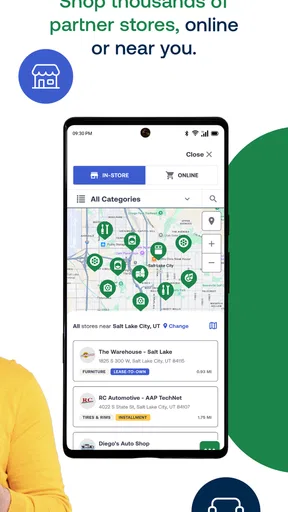
The service is tied to participating retailers, so its usefulness depends on where you plan to shop. Furniture, electronics, and automotive services are examples of purchase areas associated with the app, but acceptance at one store does not mean acceptance everywhere. I would check whether the exact retailer and item qualify before getting invested in a particular purchase. This small step can save time and help avoid building a plan around a shop that cannot complete the transaction.
Worth Reading Before You Choose

EA SPORTS FC Mobile 26 Is a Bigger Football Game, but It Takes Time

Flipboard Shows What News Apps Must Do Beyond the Feed

Switching to Android Auto Means Rethinking Your Driving Routine

Google Calendar Makes a Crowded Week Easier to Manage

Ludo King Makes the Most of the Minutes Between Plans

Baby Panda World Brings Quick Play to Modern Phones, but Its Game Library Feels Busy
That retailer dependence is a meaningful difference from a general-purpose credit card, which can often be used across a wider range of merchants, or from saving up and paying directly. A card may be more flexible for someone who already has one with suitable terms; paying cash avoids a financing agreement altogether. Snap Finance is more relevant when the purchase is available through a participating seller and the person wants to consider this specific lease-to-own route.
Application and Offer: Slow Down at the Important Point
The original experience described in this review found the application straightforward, with an available spending limit shown after applying. I would still separate a quick application from a fully understood agreement. The screen that presents an offer is a moment to read, not a reason to rush. Check the item price against the amount you expect to pay in total, and make sure the schedule is realistic for your paydays and recurring bills.
A useful habit is to write down the due dates somewhere you already check, even if the app also provides reminders. Notifications can be helpful prompts, but they should not be your only payment plan: a phone can be muted, changed, or overlooked. Keeping your own note makes it easier to see several obligations together and spot a crowded week before it becomes a problem.
What the App’s Track Record Can—and Cannot—Show
The app was released on March 29, 2023, and its current version is 2.2.11099. It requires Android 7.0 or later. I would consider those details when checking device compatibility, especially if you use an older phone, but they do not replace a careful review of the financing terms. Its free price and broad age rating are useful basics for deciding whether to install; they do not establish that every applicant qualifies or that every purchase is affordable.
Likewise, a strong average rating can help indicate that users have found the app worth trying, but the rating is not a substitute for reading recent experiences or the contract for your own transaction. A smooth interface and a positive overall impression matter, yet the financial outcome depends on the particular purchase and whether you can meet the agreed schedule.
Tradeoffs Compared with Other Ways to Pay
Compared with paying in full, financing can preserve cash for immediate needs, but it adds an obligation that follows you beyond the moment of purchase. Compared with a credit card, this app is not a universal checkout option; its usefulness hinges on participating retailers and the offer available for the transaction. Compared with waiting and saving, it may provide faster access to an item, while patience can avoid taking on a payment commitment. None of these choices is automatically best—the right one depends on urgency, total cost, and the stability of your budget.
I would be especially cautious with nonessential upgrades. A replacement couch after a necessary move may have a stronger case than a more expensive model chosen simply because a limit is available. For an urgent repair, compare the financing offer with any store payment option and with the cost of delaying the work. For a discretionary purchase, waiting until you can pay more of the price upfront may be the better value.
Who Is Most Likely to Get Value
This app may be worth considering for someone who needs an eligible purchase from a participating retailer, understands that lease-to-own is not the same as a conventional loan or credit card, and can verify that the payment schedule fits their income. It may also appeal to shoppers who have limited access to traditional credit and want to examine another route, provided they do not interpret “no credit needed” as “no financial commitment.”
I would suggest skipping it if you are already struggling to meet regular bills, cannot tell what the full payment obligation will be, or are shopping at a retailer that does not participate. It is also a poor fit if you prefer one upfront price and no continuing payment responsibility. In those situations, a less expensive item, a secondhand option, a direct retailer alternative, or saving before buying may reduce pressure.
Questions to Settle Before You Commit
Before proceeding, I would want to know whether the exact item and retailer are eligible, what the complete payment schedule is, and how the total amount compares with paying another way. I would also check how payment changes or missed payments are handled, and whether I can meet every due date without relying on optimistic assumptions about future income. These are not details to leave for later; they determine whether the convenience is worth accepting the commitment.
If the app shows a spending limit, treat it as an upper boundary rather than a target. If reminders are available, use them as backup rather than as your whole system. And if you are comparing two offers, compare the full amount and timing, not just the first payment. Those steps are simple, but they make the decision more concrete than judging an option by how quickly it lets you check out.
My Verdict on the Value
For a free shopping app, Snap Finance offers a clear reason to take a look if lease-to-own financing at a participating retailer is relevant to a purchase you genuinely need. Its convenience and potential accessibility are the main attractions. The value, however, is not established by downloading the app or seeing an available limit; it comes down to the terms attached to the item and your ability to follow the schedule.
I would use it as one option to compare, not as a default way to shop. If the complete commitment is clear, affordable, and better suited to your circumstances than the alternatives, it may help you make a necessary purchase. If the numbers feel tight or the agreement is hard to understand, I would walk away and look for a cheaper item or another payment route.
Ever found yourself in a pinch where you need a quick financial fix without the hassle of credit checks? That's where Snap Finance steps in. If you're like me and occasionally need a financial cushion to make that unexpected purchase, this app might just be your new best friend. Let's dive into what makes Snap Finance tick and why it's creating a buzz in the world of quick financing.
What is Snap Finance?
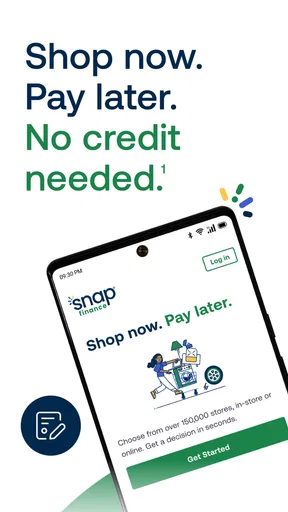
In a nutshell, Snap Finance is a lease-to-own app that caters to folks who might not have the best credit scores. It's designed to offer a flexible financing option for those sudden "I need this now" moments. From the get-go, the app promises no credit needed, which is a breath of fresh air for anyone who's been turned down by traditional lenders.
Getting Started with Snap Finance
Jumping into Snap Finance is a breeze. Simply download the app from the Google Play Store or Apple App Store, and you're good to go. The interface is intuitive, guiding you through the setup process with ease. I found the application process straightforward, with minimal information required to get started. Within minutes, I had access to my spending limit, ready to be used at any participating retailer.
Features That Stand Out
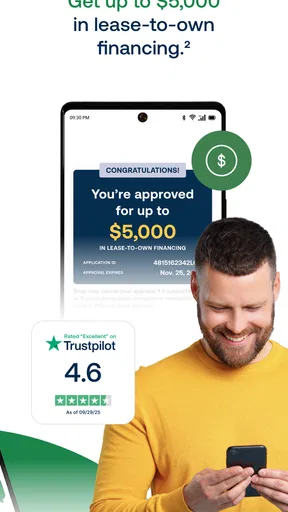
One of the standout features of Snap Finance is its instant spending limit. After a quick application, you'll know exactly how much you can spend, making it much easier to plan that next big purchase. Another perk is the flexible payment plans. You can customize your payments to fit your budget, which is a huge plus if you're trying to manage your finances more effectively.
Snap Finance also offers a wide range of participating retailers. Whether it’s furniture, electronics, or automotive services, you’ll likely find a retailer that accepts Snap Finance near you. This flexibility makes it a versatile option for various purchases.
Using Snap Finance: My Personal Experience
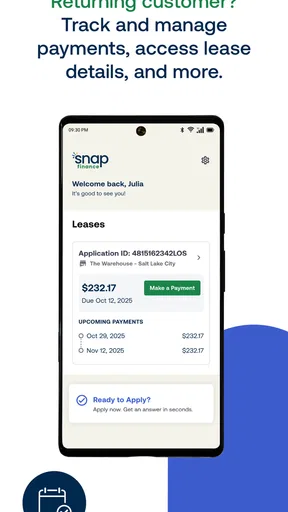
When I first used Snap Finance, I was a bit skeptical. But after a seamless application process, I was pleasantly surprised by how easy it was to use. The app does a great job of keeping everything organized, from tracking your spending to managing payments. I decided to test it out by purchasing a new couch from a local furniture store. The transaction was smooth, and I appreciated the transparency in terms of fees and payment schedules.
One thing I noticed is how the app keeps you in the loop with notifications about upcoming payments, ensuring you're never caught off guard. It's like having a financial assistant in your pocket, reminding you of your responsibilities without being intrusive.
Is Snap Finance Right for You?
If you're someone who occasionally needs a financial boost and prefers not to deal with the complexities of traditional credit, Snap Finance could be a lifesaver. It's perfect for those who want a straightforward, no-frills approach to financing. However, it's important to remember that while Snap Finance offers flexibility, it's still a lease-to-own service. This means it's crucial to keep an eye on the terms to avoid any unexpected costs.
Overall, I found Snap Finance to be a reliable and user-friendly app for quick financing needs. It's not just about offering credit; it's about providing a solution that fits into your lifestyle seamlessly. So, if you find yourself in need of a quick financial lift, why not give Snap Finance a try?
Remember, though, while Snap Finance can be a great tool, it's always wise to use any financial service responsibly. Happy spending!
Pros
- Easy application process with minimal documentation.
- No credit check required for approval.
- Flexible payment options to fit various budgets.
- Instant approval decisions for quick financing.
- Wide network of partner stores for shopping.
Cons
- High interest rates compared to traditional loans.
- Limited to select retailers and stores.
- Late payment penalties can be steep.
- Not available in all regions or states.
- May encourage overspending due to easy credit.
FAQs for Snap Finance
What is Snap Finance and how does it work?
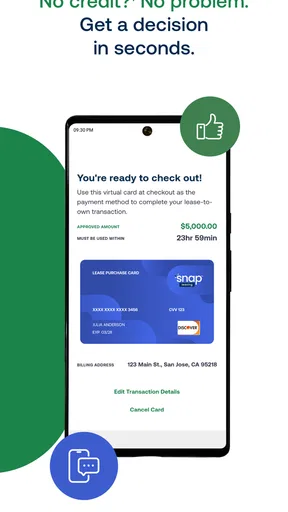
Snap Finance is a financial service app that provides quick and easy lease-to-own financing options. It allows users to purchase goods from partner retailers and pay for them over time. With flexible payment plans, no credit is required at the start, and approvals are typically instant, making it accessible for a wide range of users.
What are the requirements to qualify for Snap Finance?
To qualify for Snap Finance, you need to be at least 18 years old, have a steady income, and an active checking account. While no traditional credit score is required, Snap Finance may perform a soft credit check to verify your financial history. Meeting these criteria increases your chances of approval.
Are there any fees associated with using Snap Finance?
Yes, Snap Finance may charge initial fees and interest, depending on the payment plan chosen. It's essential to read the terms and conditions carefully to understand any potential costs. Paying off your lease early can often save you money on interest, so it's wise to plan payments accordingly.
How does the payment process work with Snap Finance?
Payments with Snap Finance are typically made through automatic withdrawals from your linked checking account. You can choose from various payment plans that suit your financial situation. It's important to ensure sufficient funds in your account to avoid any overdraft fees or penalties.
What happens if I miss a payment with Snap Finance?
If you miss a payment with Snap Finance, it’s crucial to contact their customer service immediately to discuss your options. Missing payments can lead to additional fees and impact your ability to use their services in the future. They may offer solutions or alternative arrangements to help you stay on track.


